.637eac77.png&w=64&q=75)


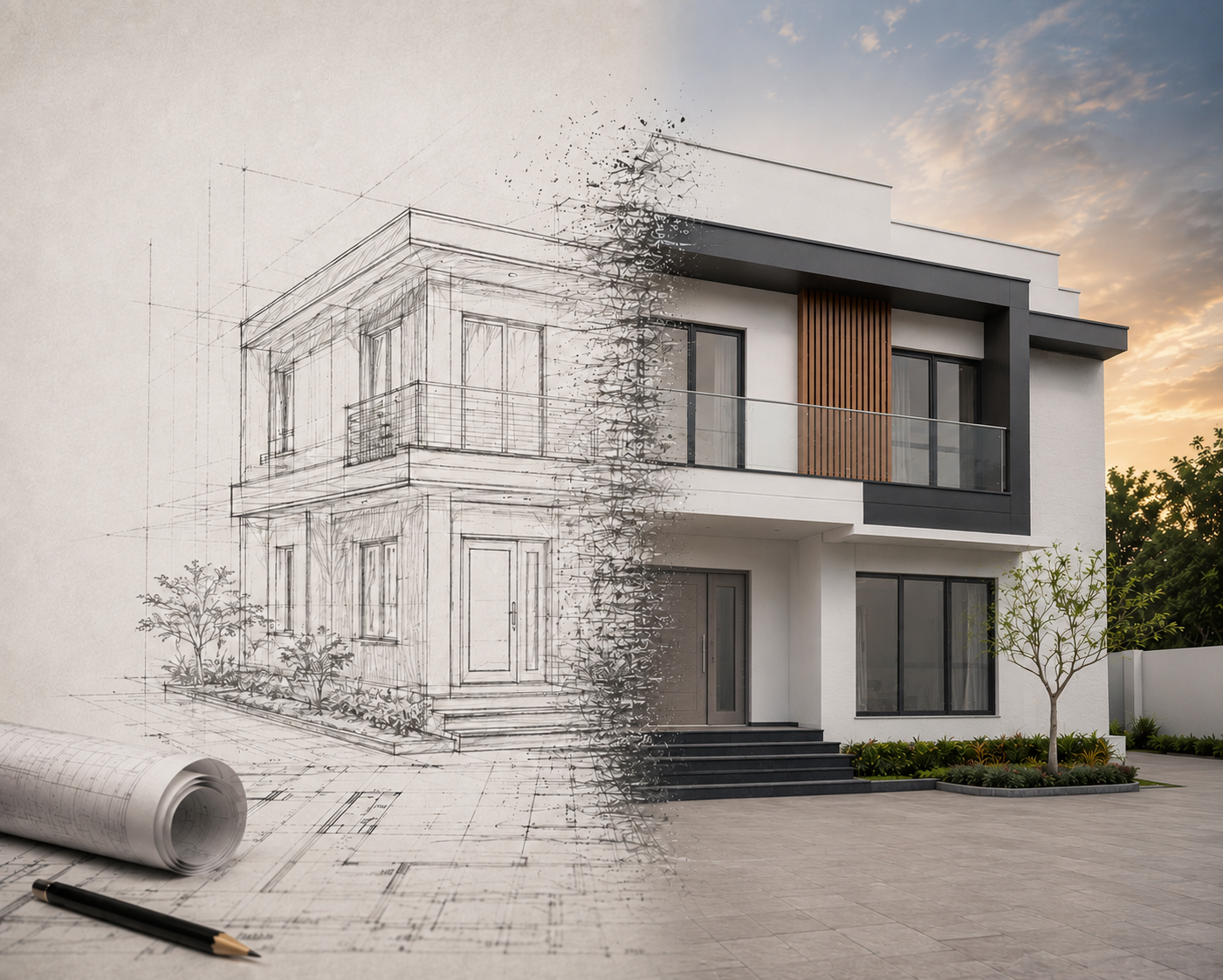
Constructing a house in India is an investment that requires proper financial planning and knowledge. In the year 2026, the scenario of constructing a house is changing due to rising costs of materials, rising labor costs, and a growing need for quality houses. Homeowners who understand the calculation of construction costs can make better decisions and avoid unnecessary costs during the construction process.
This comprehensive guide will help you understand the home building cost scenario in India, the factors that affect construction costs, the options available for professional advice such as construction consultancy, and how you can manage your costs efficiently.
Current Home Construction Cost Trends in India (2026)
As of 2026, the cost of residential building has been rising steadily because of increased demand for qualified personnel, transportation costs, and quality compliance standards.
Estimated Cost Per Square Foot
- Economy or basic homes: ₹1,800 – ₹2,200
- Mid-range residential homes: ₹2,300 – ₹2,800
- Premium or luxury homes: ₹3,000 – ₹4,000+
The rates are higher in urban and metro cities, while semi urban and rural areas are relatively cheaper. However, the factor of material and qualified personnel availability also impacts the pricing.
Get a quick, accurate estimate of your home building budget with our Construction Cost Calculator.
Critical Factors Affecting Construction Costs
There are several interrelated factors that go into the final cost of constructing a house. One of the most important factors is the geographical location, which can be influenced by soil type, accessibility, and development norms. Regions that require more foundation work or structural support tend to have higher expenses. Another factor that plays a crucial role in home building costs is the choice of materials. Prices tend to vary between basic and premium brands of cement, steel, flooring, and fixtures.
Design complexity is another factor that contributes significantly to building expenses. A simple design with space optimization tends to be less expensive in terms of materials and labor costs. On the other hand, designs that involve complex architecture with multiple facades, customized interiors, or contemporary designs require specialized expertise and sophisticated techniques. Availability of labor and built time also play a role in construction expense, as longer built periods tend to increase costs owing to increased labor costs and varying material prices.
A Practical Guide to Estimating Your Home Building Budget
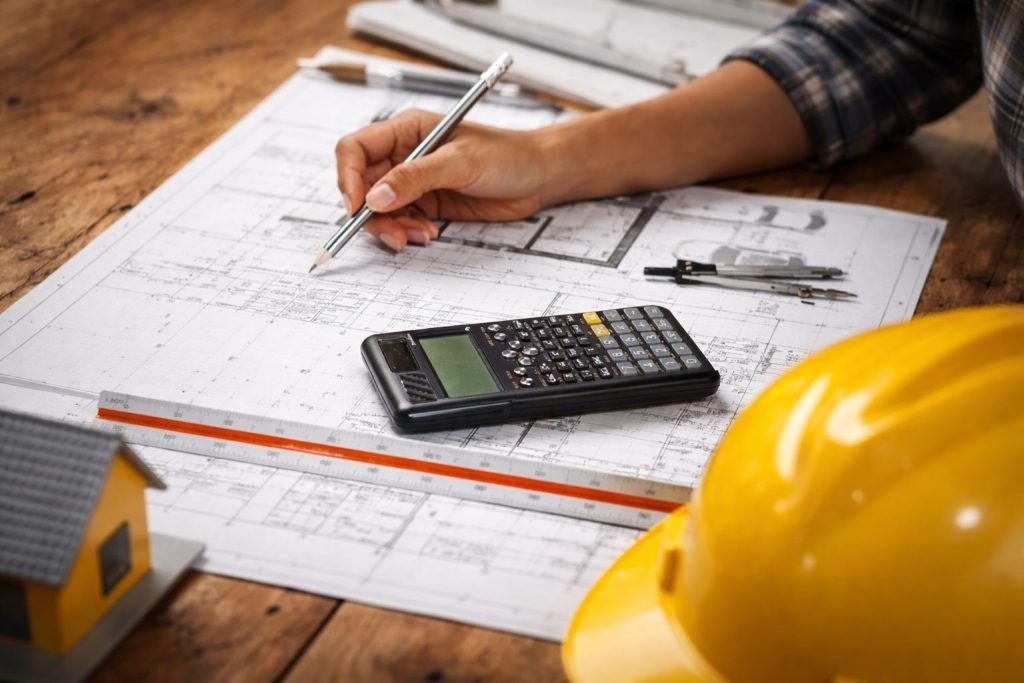
To calculate the total investment needed for building your home, you need to start with the architectural design that has been finalized, which will give you the built up area. This area will then be calculated by multiplying it by the cost per square foot, depending on the rate that is applicable to you.
In addition to the cost of construction, it is important that you also factor in other expenses that may be incurred, such as architectural design, engineering, utility, boundary wall, and government charges.
The average budget breakup for a residential project would be as follows:
- Material and supply: 50-60%
- Labor: 25-30%
- Overheads and profit of contractor: 8-15%
- Professional services: 8-12%
Key Areas That Define Your Home Building Investment
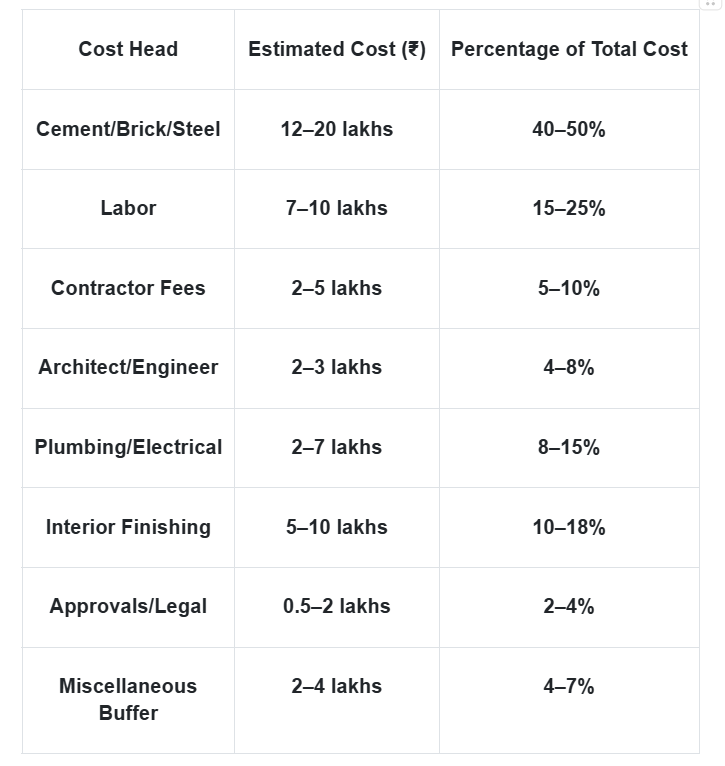
For a 2,000 sq ft home, approximate costs allocated by category:
Construction Cost Breakdown by Phase
The cost of civil work is distributed over various phases, beginning with foundation and structural built to completion and delivery. Structural construction accounts for a substantial amount of expenditure because of the heavy use of cement and steel. Walling, masonry, and plastering are the next major components, followed by electrical and plumbing connections that provide safety and functionality.
Flooring, painting, doors, windows, and fixtures represent the final phase and final look of the home, which can be quite different based on material selection and personal choice. It is essential to comprehend how the cost of civil work is distributed over various phases to make informed decisions about spending.
The Need for Early Design and Cost Planning
One of the most effective ways to control costs and avoid unexpected financial burdens is to plan properly before embarking on the built process. Finalizing architectural designs, structural designs, and material requirements at the initial stage of planning will help create a roadmap for successful execution. When the design requirements are clearly defined in advance, contractors and home building teams can execute their tasks more effectively, thus minimizing the possibilities of delays, mistakes, and changes. Changes in designs brought about during the creation phase result in material wastage, rework, and labor inefficiencies, thus contributing significantly to the overall costs and project timelines.
Budget planning is equally important to ensure a smooth process. A detailed budget plan will enable homeowners to accurately estimate costs, allocate budgets properly for various stages of whole process, and plan for contingencies. It will also enable a better balance between quality and costs by giving priority to necessary structural requirements while keeping aesthetic and non critical elements flexible. With a properly planned budget, homeowners can monitor costs more effectively, take informed decisions at every stage, and have better control over the entire process, thus ensuring a cost effective and successful execution of the project.
Explore our portfolio to see how KONNBOT has delivered quality driven residential and commercial projects.
The Role of Construction Consultancy in Cost Minimization
The rising complexity of residential building projects and the increasing demands of homeowners for quality, durability, and transparency are making professional construction consultancy services more and more important in the year 2026. Consultants help homeowners with practical cost estimation, design coordination, and material planning that meets performance, durability, and cost requirements. Their technical knowledge prevents over designing, material wastage, and built mistakes, ensuring that structural integrity, compliance, and quality are met without unnecessary costs.
With the increasing use of technology and advisory platforms, solutions such as KONNBOT are becoming helpful in the initial stages of planning for home building. KONNBOT helps homeowners with data driven insights, cost estimates, and project planning assistance, enabling them to assess feasibility and cost alignment before actual work begins. Homeowners also benefit from free construction consultancy services in the planning stage, enabling them to compare various methods, assess timelines, and shortlist the appropriate contractor with more confidence. This helps in minimizing financial risks, making better informed decisions, and playing a pivotal part in optimizing overall cost without imposing an additional burden.
Choosing the Best Contractor for Your House
A good contractor is very important for cost management and success. A professional contractor will ensure that there is coordination between labor, materials, and time.
What to Look for in a Contractor -
- Clear quotes with specifications
- Experience in residential projects
- Payment milestones
- Agreements and timelines
- Warranty or defect liability support
Do not select a contractor based on the lowest quote because low quality work can be very expensive in the long run.
Methods to Control and Minimize Construction Costs
- Smart Planning and Design Efficiency - Controlling expenses does not always mean that one has to compromise on the built quality. Effective planning from the very start will enable homeowners to match their needs with their budget constraints. Space efficient designs that maximize space will directly contribute to minimizing material usage and built costs. This will also enable homeowners to avoid complex structural designs and architectural features that are unnecessary and costly, yet still enable them to have a functional and beautiful home.
- Material Selection and Local Sourcing - Selecting the right materials is one of the most important factors that will help homeowners control cost. Using materials that are locally available will help minimize transportation cost. While it is tempting to choose high end materials, it is important to select materials that are durable and suitable. Taking expert advice at the initial stages through construction consultancy services helps homeowners anticipate risks before they become costly. Construction consultants help with cost estimation, design optimization, and execution planning, ensuring clarity at every stage. Free construction consultancy services are also available to many homeowners during the planning stage, providing important inputs on budgeting, scheduling, and contractor selection.
- Avoiding Frequent Design Changes - Design changes during the course of creation are some of the most frequent causes of cost overruns. Changes introduced after the start of creation activities tend to result in rework, material losses, and labor costs. Finalizing designs, floor plans, and interior designs before embarking on built activities ensures smooth execution and avoids unnecessary expenses. A consistent design strategy is a major contributor to budget control.
- Construction Scheduling and Supervision - Strategic planning of activities is effective in managing labor costs and minimizing variations in material prices. Delays in activities tend to increase costs due to prolonged site management and increased labor costs. Effective site management ensures that activities are carried out as per plan, minimizing errors and rework. Continuous monitoring also enables the maintenance of quality standards while staying within the budgeted costs.
- Early Professional Guidance and Consultancy - Taking expert advice at the initial stages through construction consultancy services helps homeowners anticipate risks before they become costly. Construction consultants help with cost estimation, design optimization, and execution planning, ensuring clarity at every stage. Free construction consultancy services are also available to many homeowners during the planning stage, providing important inputs on budgeting, scheduling, and contractor selection.
Conclusion: Building Smart in 2026
The home construction cost in India in 2026 is affected by many factors, such as materials, labor, planning, and expert help. Even as the cost of home building is increasing, proper planning, the right contractor, and expert advice can help homeowners construct a strong, durable, and comfortable home within their budget.
With the right knowledge of cost dynamics and the help of good consultancy services, homeowners can transform their dream home into a reality without any financial burden.