.637eac77.png&w=64&q=75)


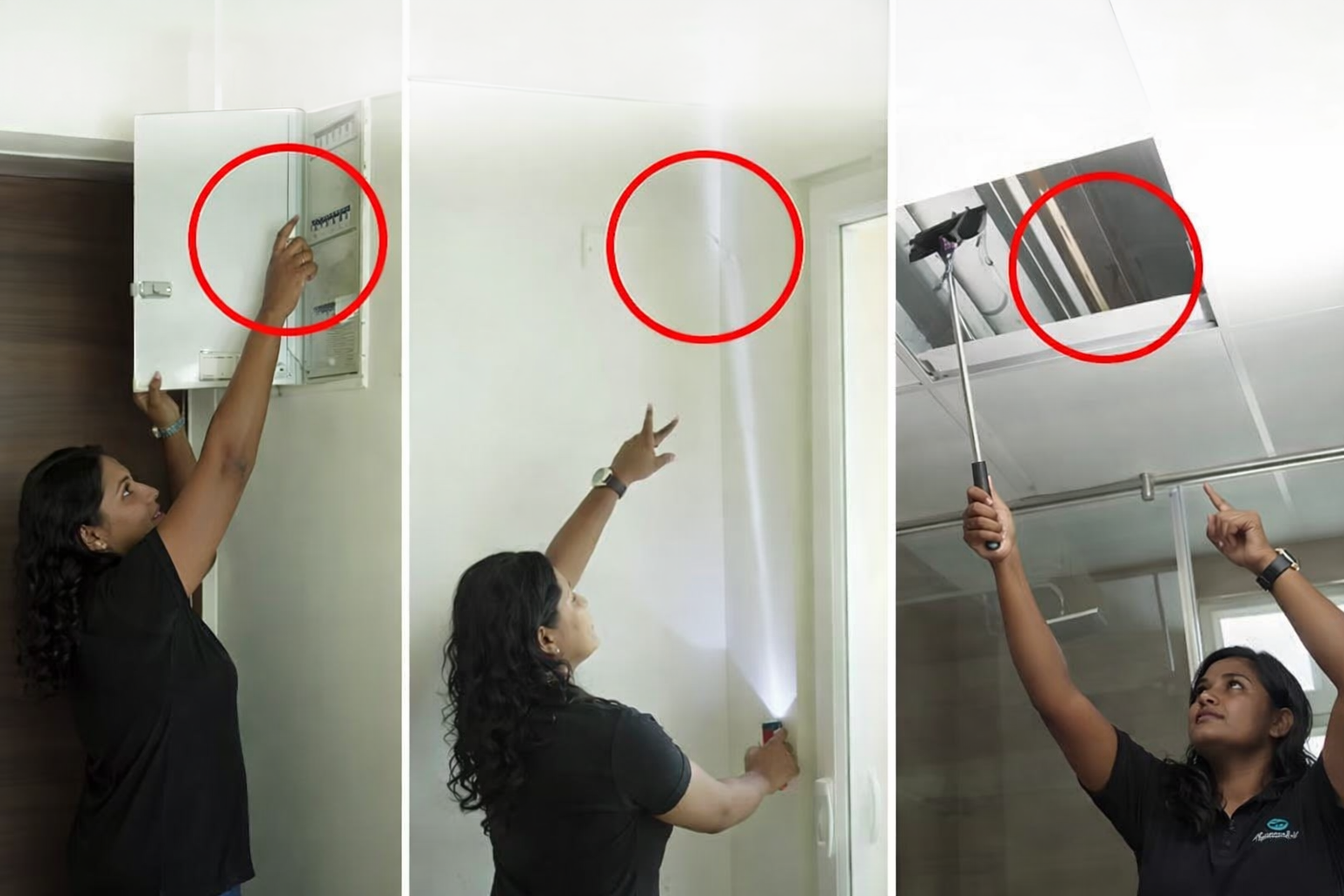
Handover issues are one of the most significant hidden risks in current project delivery. Quality inspections are performed mostly prior to project completion; however, with experience and operational workflow in a realistic environment is done after handover has already occurred.
Generally, building default occurrences are 65%-85% post delivery across industry studies, post-occupancy audits and liability reports. Post-completion quality management is therefore one of the major components for protecting asset value, controlling costs and reducing conflict.
This article looks at actual problem statistics, reasons for delays in defects, and reveals how the use of digital tools, such as KONNBOT, can help reduce the number of issues.
Defect rates worldwide have proven remarkably similar as indicated by studies.
- 65%-70% problems are discovered in the first 12 months
- 75%-80% faults are found during the defect liability period
- Defect percentages can rise to 85% in complex developments
Defects Are Generally Found By The Asset Type
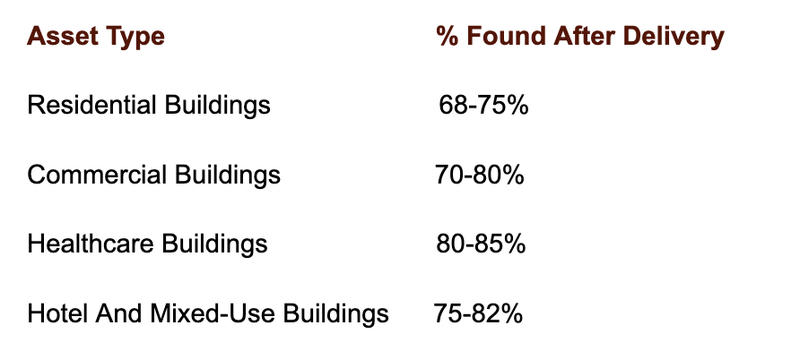
The above data confirms the idea of post-handover defect management is very important to the achievement of an asset’s value and performance.
Why Are Most Building Defects Noticed After Delivery ?
1. The Systems Have Not Been Tested Properly Until After People Have Occupied Them Completely:
Mechanical systems, electric, plumbing, fire, and ventilation systems, could all pass a commissioning test without being used in a live environment day to day and experience a different level of performance.
Data indicates that: 40%-50% of all building faults identified after handover are directly related to building services. 25%-30% of all building problems are identified by occupants within the first few months are attributable to HVAC systems alone.
2. Latent Defects Take Time To Develop:
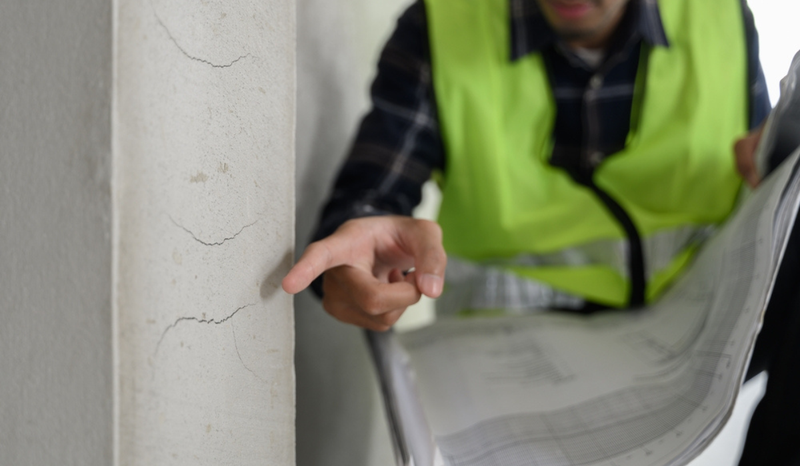
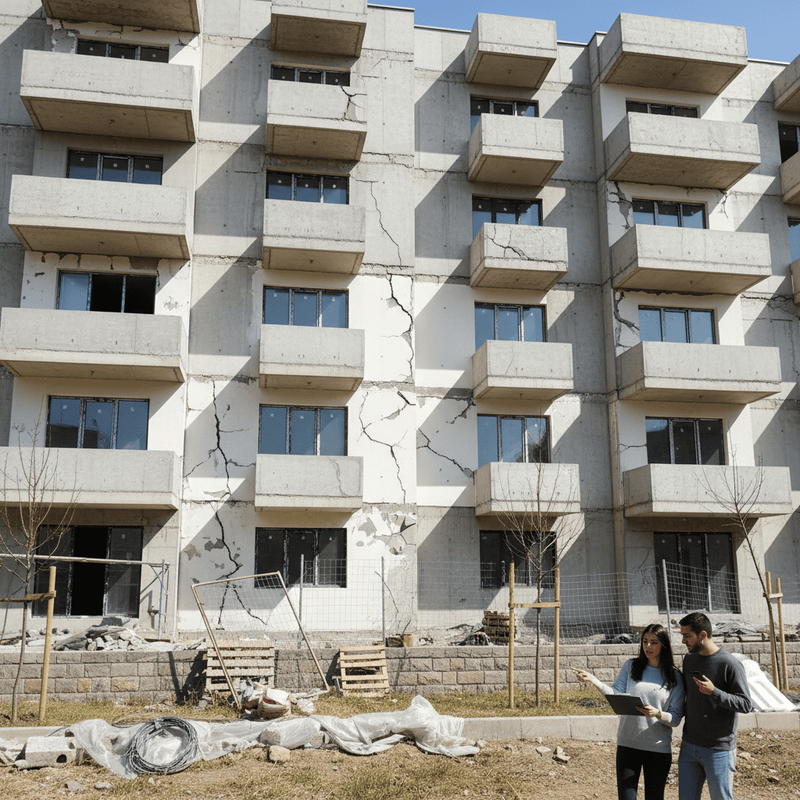
Latent issues are hidden problems disguised within the building fabric. According to research 30%-35% of building deficiencies are identified after delivery is latent, Waterproofing issues typically occur between 6-24 months of completion. Cracks from structural movement usually develop as a result of the temperature fluctuations of the seasons. Very few of these problems will be identified during final inspection.
3. Time Pressure At Practical Completion:
One of the reasons for the deteriorating quality of finished work on a project is that as project completion draws near, there is increasing time pressure to complete all finishes to a high level.
Analysis into the cause of defects indicates that the last 10% of the project schedule results in approximately 40% of all issues reported by new occupants. As a result of time compression, a number of issues will be created as the project is occupied.
The following data provides an overview of the types of problems identified by defect audits conducted after the completion of a new building:
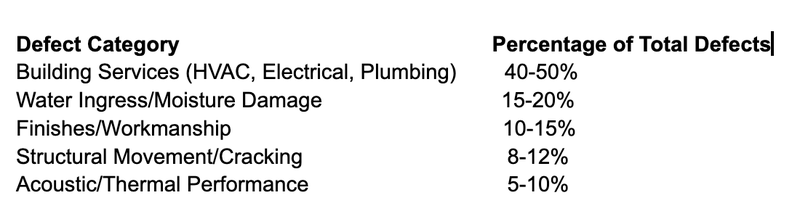
Faults related to services and moisture account for over 60% of all defects reported after the handover of a building.
When Do Defects Appear After Handover?
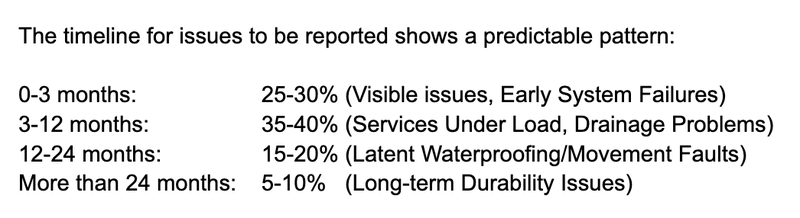
This supports the notion that the handover of a building is not the end of risk; rather, it is the beginning of actual performance testing of systems and performance.
The Costs Associated With Defects Reported After Handover
Deficiencies found after the delivery of a building tend to be substantially more expensive to remediate than if discovered during the construction of the project.
Repairs are estimated to cost 3-5 times what it would cost to repair the defect while constructing the project.
Construction of a building while it is occupied will lead to an increase in labor costs for repairs of approximately 30-50%.
The cost of restricted access to areas where repairs are required and disruption to users due to the repairs will increase the costs associated with repairing the defects by 20-40%.
Remediating construction problems after the handover of a building may consume between 2-4% of the total value of a project. This will negatively impact the profitability of a development project.
How to Avoid Post Handover Defects with KONNBOT
One of the main causes of 65 to 85% of faults after delivery are the fragmented inspections, manual tracking, and lack of accountability during delivery. KONNBOT addresses these issues and has an advantage.
The KONNBOT Digitization and Automation Solution
KONNBOT digitizes and automates defect management before, during, and after handover, ensuring timely identification and resolution of defects.
KONNBOT's Solutions for Reducing Post Handover Defects Include:
- Real time tracking of issues so that defects identified during this process do not carry over into the occupancy phase of the project;
- Centralized inspection and record keeping enables fewer missed or duplicate defects;
- Automated accountability of problems ensures that every issue has a responsible party and a due date;
- Data driven information about recurring defective conditions is available at an early stage of the project; and,
- Seamless changeover documentation supports faster resolution of defect claims during the defect liability period.
The Benefits
KONNBOT helps improve visibility and coordination throughout the life of the project by helping teams:
- Reduce post handover defects by 30% to 40%;
- Reduce costs associated with rectification due to late discovery of faults; and,
- Minimize disputes throughout the defect liability period to improve asset performance from day one.
Build Stress free With KONNBOT

📩 Email: info@konnbot.com
📞 Phone: +91 99818 33966 | +91 77460 05567